
Pay Transparency in the EU – A Practical Guide for Irish Employers
Compliance & Regulations Pay Transparency 101: What is pay transparency? Compliance & Regulations
 Which employees are included in the scope of the Pay Transparency Directive?Compliance & Regulations
 How can companies address pay gaps without disrupting internal morale?Compliance & Regulations
3 Common Myths about Payroll Outsourcing Irish Employers Should Rethink
Discover the truth behind common payroll outsourcing myths in Ireland. Learn how outsourcing can improve your business.

5 Ways to Support Work-Life Balance in Your Organisation - Insights from SD Worx Ireland
Discover 5 practical ways to improve work-life balance in your organisation. Learn how flexibility, trust and HR strategy help attract and retain talent in Ireland.

What is a shadow payroll? A guide for Irish employers
What is shadow payroll, and how can it be run compliantly? Keeping tax compliant with countries abroad when it comes to a temporary situation of a worker abroad is a key responsibility of payroll teams, so we've put together a guide to help you out.

5 Warning Signs It’s Time to Upgrade Your Time Management Solution in Ireland
If you're struggling to decide if the time is now, we've compiled 5 surefire warning signs that it's time to consider an upgrade to your time management systems.

5 payroll pitfalls Irish employers still face
Discover the five most common payroll pitfalls Irish employers face and how to avoid them with practical solutions and expert support.

Contractor Classification in Ireland: Employer Guide
A practical guide to contractor classification in Ireland, covering legislation, Revenue tests, risks, and payroll implications for employers.

Payroll health check: why checking the health of your payroll is now a business essential
A practical guide to payroll “health”: the risks of leaving issues unchecked, what a payroll health check includes, and how SD Worx Ireland can help you optimise payroll processing.

Are You Ready for Upcoming Irish Employment Law Changes?
Need an update on all recent and upcoming changes to employment laws in Ireland? We've deep dived into what's next to make sure you're prepared.

How to Introduce Flexible Working in Ireland - A Real Case Study from SD Worx Ireland
Discover how SD Worx Ireland successfully rolled out flexible working and flexitime without losing control, improving productivity and employee satisfaction.

Right to Disconnect - What Irish Employers Need to Do Now to Stay Compliant
Learn how time and attendance systems reduce admin, improve payroll accuracy, and support flexible, compliant workforce management.

How to make your payroll more neuro-inclusive: 5 practical steps for Irish employers
Discover how Irish employers can improve payroll clarity and accessibility with practical steps to support neurodivergent employees and enhance experience.
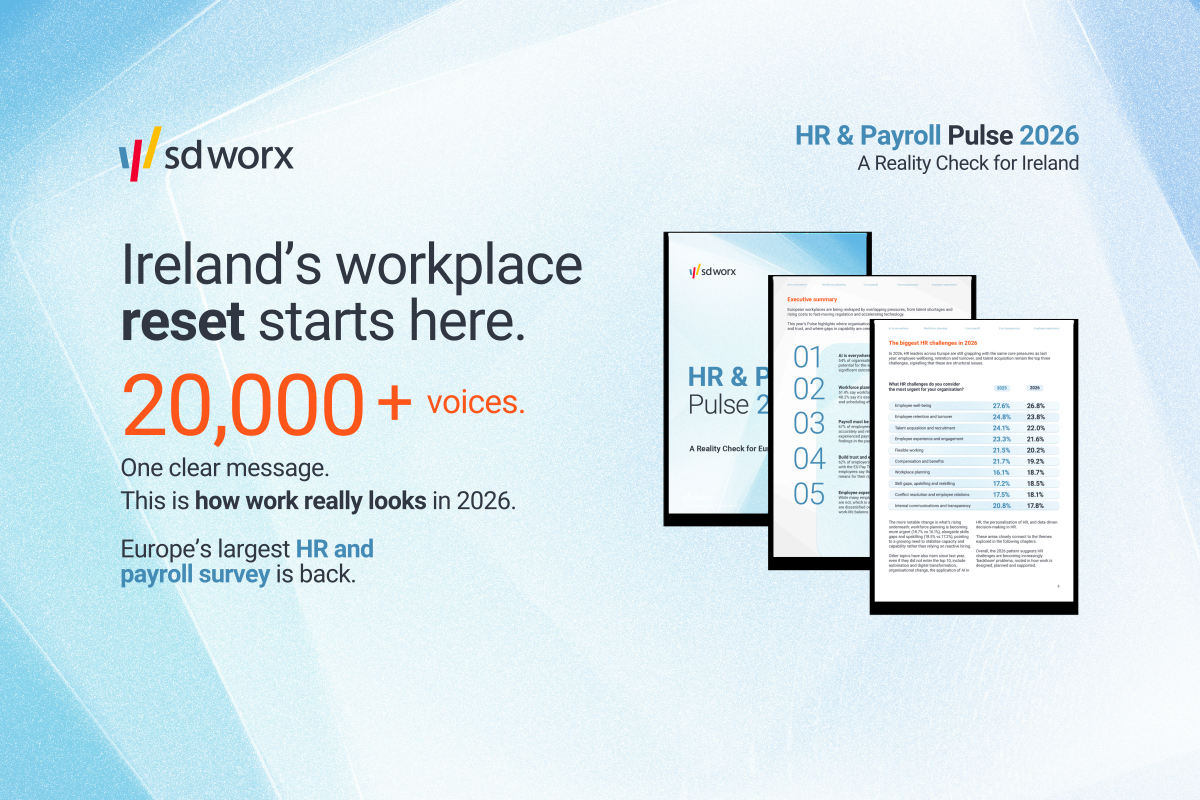
HR & Payroll Pulse 2026 Ireland - Key Trends, Insights & Resources
Explore the key findings from HR & Payroll Pulse 2026 in one place. This guide brings together the biggest trends shaping HR and payroll in Ireland - from AI adoption and workforce planning to employee experience and pay transparency - with links to deeper insights and expert analysis.