HR & Payroll Pulse 2026 Ireland - Key Trends, Insights & Resources
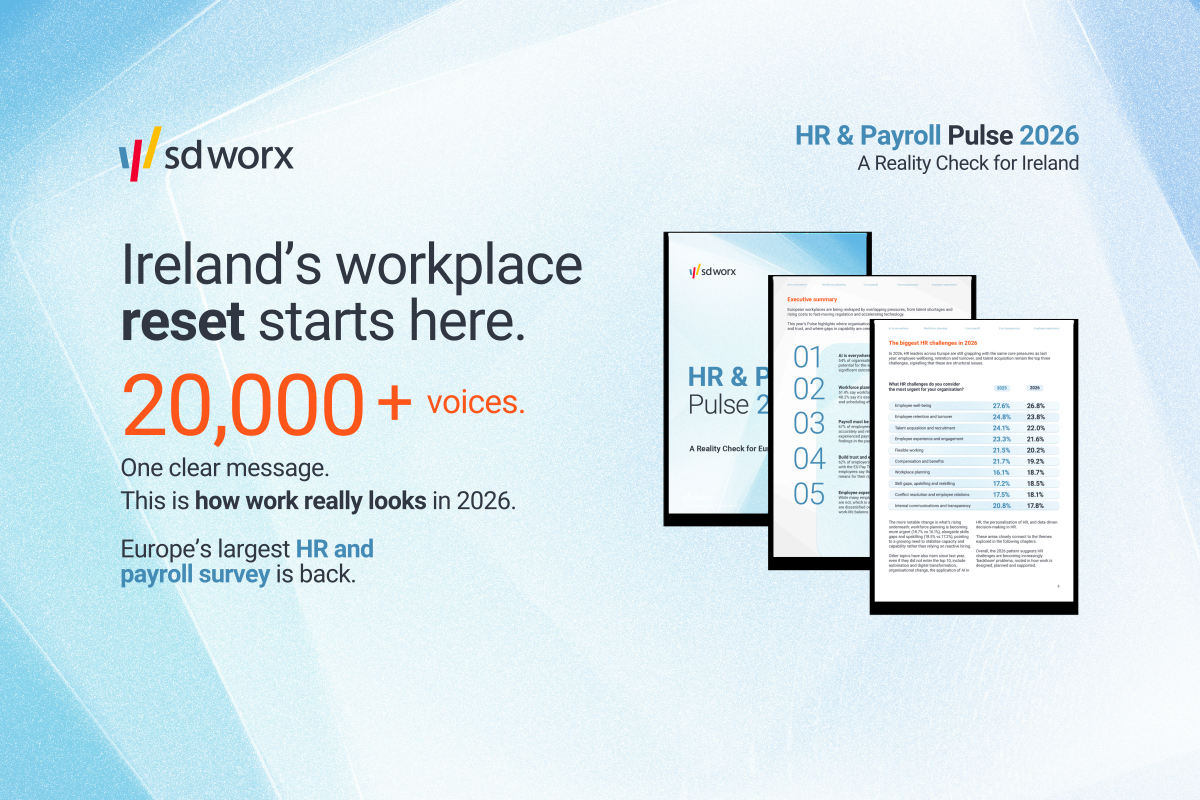
HR and payroll teams are being asked to do more in 2026 - often with less time, tighter budgets, and higher expectations. Skills shortages, rising costs, regulatory change and the rapid expansion of AI are all reshaping how organisations operate and how people experience work. SD Worx’s latest HR & Payroll Pulse 2026 research brings those pressures into focus, drawing on insights from 1000 employees and 301 HR decision makers across Ireland.
To make that research easier to explore, we’ve brought the key Pulse assets together in one place.
This guide gives you a practical starting point. It highlights the biggest themes emerging from the research and points you to the most relevant articles if you want to explore each area in more detail. Whether you are reviewing your people strategy, rethinking payroll, or trying to understand what AI means in practice, this is a simple way to get the full picture and then go deeper where it matters most.
If you want the full view first, start with HR & Payroll Pulse 2026: A Reality Check for Ireland. The report is designed for HR leaders, payroll professionals and business decision-makers, and covers the key shifts shaping HR and payroll in Ireland in 2026, including AI, employee experience, trust, flexibility, and the growing expectation for HR to deliver measurable business value.
Why this research matters now
The Pulse findings show that this is not just a year of change. It is a year of overlapping pressure points. Across Ireland and Europe, organisations are trying to respond to rising expectations from employees while also dealing with cost pressure, talent scarcity and new technology. The result is a more demanding environment for HR and payroll teams, where reactive decision-making is no longer enough.
That is why this guide matters. Instead of treating payroll, reward, AI, workforce planning and employee experience as separate topics, the research shows how connected they really are. The organisations that respond well will be the ones that join the dots early and act with more clarity.
What are the biggest HR and payroll challenges in 2026?
One of the clearest messages from the research is that HR and payroll leaders are under significant pressure. Talent shortages, compliance demands, rising costs and day-to-day workload are colliding at the same time, making it harder to prioritise and plan with confidence. In Ireland, employee well-being remains one of the top urgent HR issues, cited by 23% of organisations, while employee retention and turnover is the single most urgent challenge identified.
The article Pulse 2026: The state of HR and payroll in Europe breaks this down in more detail. It explores the top 10 pressures facing HR in 2026 and shows how these issues are affecting operations, workforce planning and strategic influence. It is a useful next read if you want to benchmark your own organisations priorities against the wider market
How is AI changing HR and the workplace?
AI is no longer something HR teams are simply watching from the sidelines. It is already moving into daily workflows and longer-term planning. More organisations in Ireland are now actively exploring and investing in AI, with 62% exploring its potential and 59% investing in the technology. At the same time, progress remains uneven. Only half of employees across Europe trust how AI is used in their companies, and fewer than half of organisations say employees currently have the skills to use AI tools effectively.
That tension matters. AI offers clear opportunities to improve efficiency, automate routine work and support faster decision-making. But without trust, transparency and the right support, adoption can easily outpace impact.
If you want a clearer view of where AI is creating value and where organisations are still struggling, Pulse 2026: AI in the Workplace is the best next step. It looks at how companies across Europe are applying AI in HR, what is holding back meaningful progress, and why trust and clarity are becoming just as important as the technology itself.
Why payroll is becoming more strategic
Payroll is often treated as an operational necessity, but the Pulse research suggests its role is changing. Payroll is becoming more closely tied to workforce planning, transparency, financial well-being and employee experience. SD Worx Research Institute surveyed more than 20,000 HR leaders and employees across 16 countries on this topic, highlighting how payroll is becoming a more visible and connected part of the wider people agenda.
In Ireland, 23% of organisations say pay transparency initiatives are among their top five payroll priorities, 23% say the same for financial well-being initiatives, and almost a quarter prioritise employee self-service solutions. Those figures point to a clear shift - payroll is no longer just about processing accurately, but about creating visibility, supporting trust and making work feel more joined up for employees.
The article More than just admin: 5 payroll trends defining HR strategies in Europe explores that shift in more detail. It is a valuable read if you want to understand how payroll is evolving from a back-office function into a more strategic part of HR decision-making.
How are organisations approaching workforce planning?
Workforce planning is climbing the agenda fast. The combination of slower growth, labour shortages and uncertainty around AI is forcing organisations to think more carefully about how they structure work, invest in skills and control workforce costs. In Ireland, 60% of organisations say workforce planning is a high priority in 2026, while 22% say it is one of their top pressures.
That makes workforce planning more than a capacity exercise. It is becoming a strategic discipline - one that helps organisations decide where human talent creates the most value, where automation can support productivity, and how to stay responsive without relying on ad hoc decisions.
If this is a priority area for your team, Equipping HR for the future of work: Europe’s workforce planning trends in 2026 goes deeper into how organisations are responding and where HR may still need stronger tools, models and insight.
What do employees actually want in 2026?
The Pulse research also makes one thing very clear - employee experience cannot be treated as a side issue. It sits at the centre of retention, performance and trust. While many employees report that the basics are in place, a sizeable minority are not having a positive experience at work. In Ireland, 24% of employees say they are dissatisfied with their work overall, 41% are dissatisfied with their work-life balance, and 23% say work is having a negative impact on their mental health.
Those numbers matter because they show that reward and recognition are not just about packages or perks. They are about how people feel at work - whether they feel valued, fairly rewarded, supported by managers and able to sustain the pace of work over time. The same research shows that 37% of employees in Ireland place supportive colleagues and a positive team atmosphere among their top five drivers of employee experience.
If you want to understand what employees value most right now, What employees want: A reward guide to increasing employee satisfaction in 2026 is the report to read next. It connects employee sentiment with reward strategy and shows where organisations can make practical improvements that strengthen satisfaction and retention.
Dive Deeper into these Trends
While the findings in the HR & Payroll Pulse 2026 Ireland report provide a comprehensive view of the challenges and opportunities facing employers, some topics deserve a closer look. To help HR and business leaders turn insights into action, SD Worx has released four specialised reports that explore the most pressing workplace trends in greater detail.
Payroll: The Foundation of Employee Trust and Business Performance
Payroll is increasingly recognised as more than an administrative function. It sits at the centre of employee trust, compliance, workforce data and operational efficiency. Our latest report, Payroll at the Core of How Work Runs, highlights why payroll has become a critical business capability, with organisations under growing pressure to improve accuracy, strengthen compliance and unlock value from payroll data.
AI: Moving Beyond Experimentation to Real Business Value
AI adoption continues to accelerate across Ireland, but many organisations are finding that success requires more than simply implementing new tools. Our Designing AI-Enabled Work report explores how organisations are redesigning workflows, building governance frameworks and developing workforce capabilities to ensure AI creates meaningful business outcomes while maintaining employee trust.
Reward: Balancing Fairness, Transparency and Affordability
Reward strategies are entering a new era shaped by rising employee expectations, cost pressures and increasing transparency requirements. In Measured Trust, Managed Cost: The New Reward Reality, we examine how organisations can create reward strategies that demonstrate fairness, support financial wellbeing and meet evolving expectations without compromising business sustainability.
Workforce Planning: From Headcount to Capability Planning
With talent shortages, changing workforce expectations and rapid technological change reshaping the labour market, workforce planning has become a strategic priority. Our report, Workforce Planning Has Become Urgent, explores how Irish organisations are moving beyond traditional headcount planning towards skills-based workforce strategies that improve resilience, support growth and prepare organisations for the future of work.
Bringing it all together
However, the value of the Pulse research is not just in the individual findings. It is in the bigger picture they create together.
HR, payroll, AI, reward and workforce planning are no longer separate conversations. They are part of the same reality facing employers across Ireland and Europe. Getting ahead in 2026 means understanding how these themes interact - and then taking practical action based on what matters most to your organisation.
That is exactly what HR & Payroll Pulse 2026: A Reality Check for Ireland is designed to help with. Start there for the full picture, then use the supporting articles in this guide to dig deeper into the topics that matter most to your team.
Related Articles

3 Common Myths about Payroll Outsourcing Irish Employers Should Rethink
Discover the truth behind common payroll outsourcing myths in Ireland. Learn how outsourcing can improve your business.

What is a shadow payroll? A guide for Irish employers
What is shadow payroll, and how can it be run compliantly? Keeping tax compliant with countries abroad when it comes to a temporary situation of a worker abroad is a key responsibility of payroll teams, so we've put together a guide to help you out.

5 payroll pitfalls Irish employers still face
Discover the five most common payroll pitfalls Irish employers face and how to avoid them with practical solutions and expert support.